What a start to OpenSearchCon Europe in Prague. This morning’s keynotes set the tone for what promises to be a great two days, and a few themes emerged that speak directly to where we are headed as a project and as a community.
Bianca Lewis, Executive Director for the OpenSearch Project and James Curtis, senior research analyst at S&P Global Market Intelligence, opened with a fireside chat on the state of enterprise search. According to Curtis, more than half of companies globally have already adopted or are exploring vector databases, but organizational readiness is still catching up to the technology. Data is scattered, governance is hard, and cultural change takes time. His view on where it is all heading aligns closely with our own: enterprises want insight, not just search results. They want to describe what they need and get something useful back. Agents are going to depend on a reliable memory and retrieval layer to make that happen, and that is exactly where we are investing.
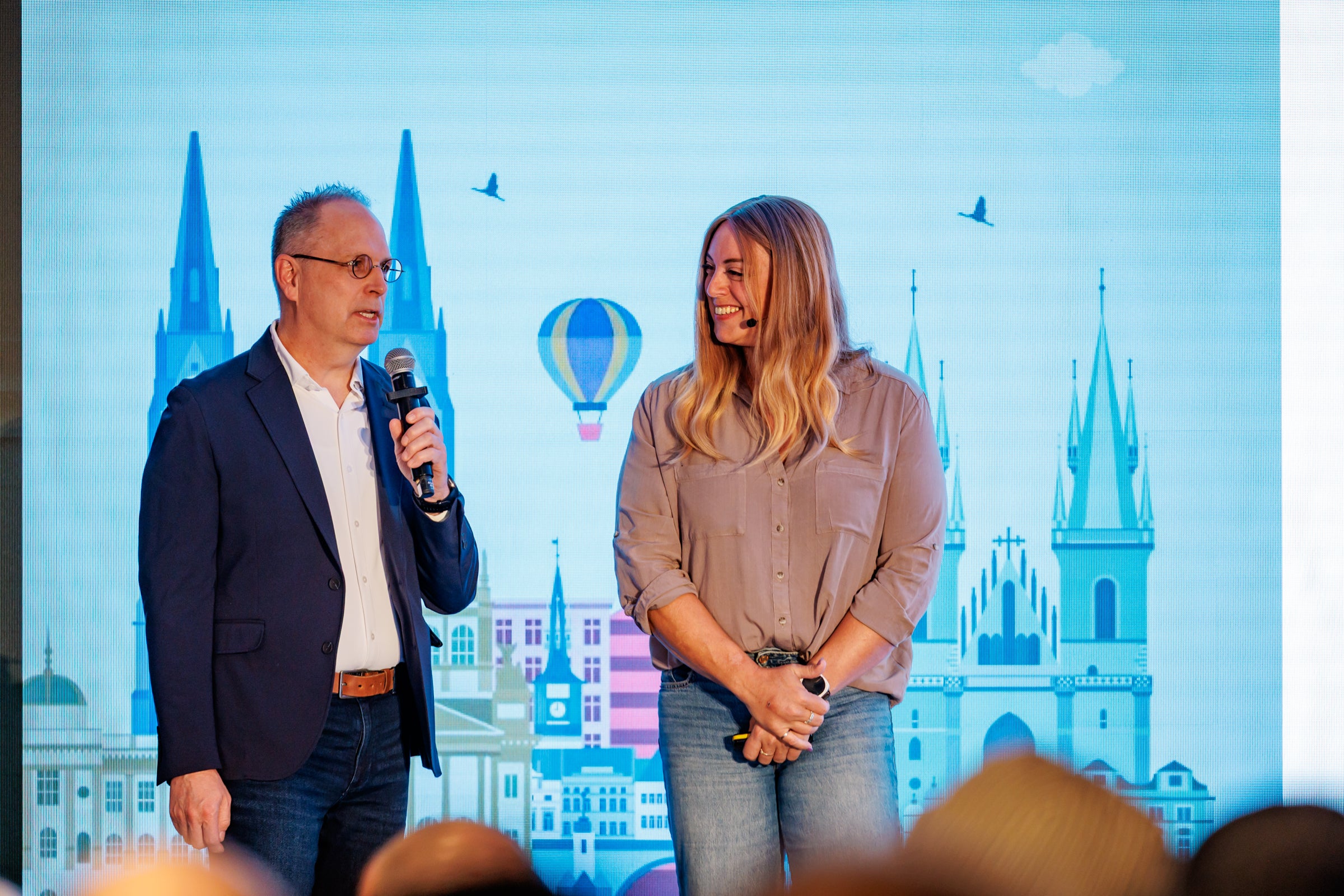
Carl Meadows, Chair of the OpenSearch Software Foundation and Head of Product at AWS, shared a look at where the project is headed and introduced two recent launches: OpenSearch Launchpad, OpenSearch Relevance Agent and the OpenSearch Observability Stack.
In his live demo, Meadows showcased how OpenSearch Launchpad makes it possible to build a fully functional hybrid search application directly from an AI IDE through natural language, no deep search expertise required. He then revealed how the OpenSearch Relevance Agent helps teams improve search quality over time using real user behavior data, all from within OpenSearch Dashboards. Meadows also highlighted the new Observability Stack, a single-click deployment that brings together logs, tracing, and Prometheus metrics in one unified experience, making a level of functionality previously available only through commercial vendors accessible as open source.
Finally, Meadows welcomed CERN to the OpenSearch Software Foundation, alongside our newest members Big Data Boutique, OpenSource Connections, and Resolve Technology.

Dom Couldwell, Product Manager for OpenSearch, from IBM closed the morning with a talk built around a deceptively simple idea: understanding intent is the key to delivering relevance that actually matters. Not just what a user typed, but what decision they are trying to make, how quickly they need to make it, and how much context is enough to get them there. That understanding, he argued, is what determines which techniques to apply, how to blend lexical and semantic approaches, and ultimately how to measure whether search is working at all.
Couldwell was direct about where the industry has overcomplicated things. Vectors are genuinely powerful and unlock capabilities that were not possible before, but they are not a complete answer on their own. Teams that have gone all-in on vector-only approaches are running into real limits around cost, latency, and transparency at scale. His view is that the OpenSearch community is well placed to be a voice of reason here, helping practitioners understand where the balance lies rather than chasing the next layer of complexity. His closing thought captured it well: the goal is humans and AI acting faster with confidence. If users do not trust the results they are getting, none of the underlying technology matters.

That is a wrap on day one. Join us back here tomorrow as OpenSearchCon Europe continues with another full day of sessions, demos, and conversations from the community.